Engineering
Why companies must build a Minimum-Viable-Product(MVP)
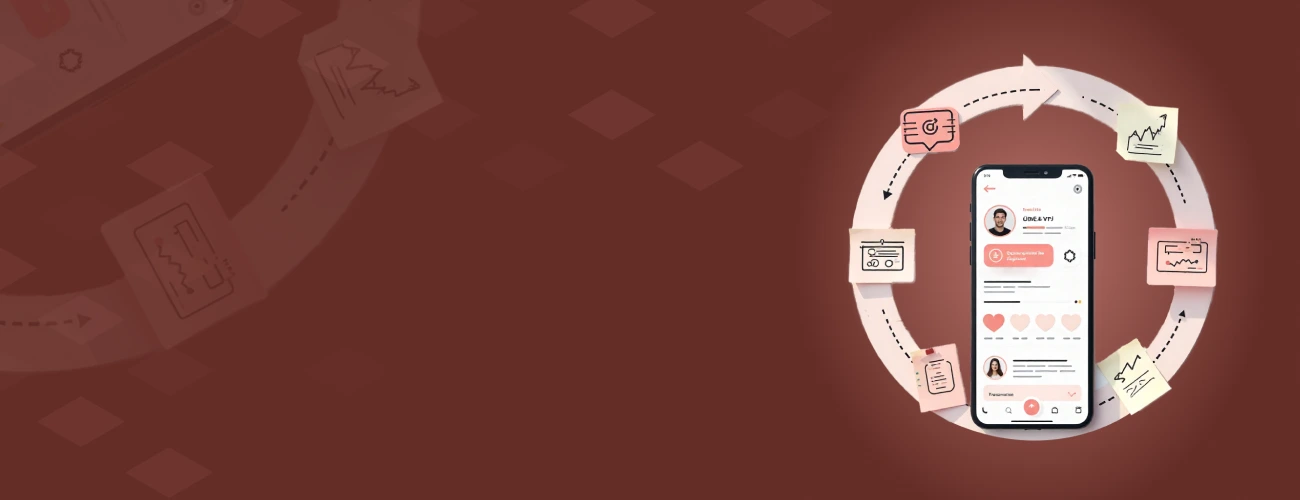
A Minimum Viable Product is a particular stage of product development for a tool, website or app where a new product is unveiled with features adequate to cater to the early stage users/beta-testers. Subsequently, the continuous feedback of the early users enables the company to tweak, remove or add features and capabilities to the product to make it a complete solution.
There are plenty of instances where companies started their products and services as MVP and have subsequently undergone steady upgrades to become great success stories. One of the commonest examples of an MVP is none other than the games we play on our smart devices or apps and social networks such as Uber, Facebook, and WhatsApp etc.
The primary purpose of building a Minimum Viable Product is not to launch a perfect product, but to validate assumptions and reduce uncertainty before committing significant time and resources. An MVP helps organizations move from ideas to insights quickly and efficiently.
One of the most critical objectives of an MVP is to determine whether a business idea is worth pursuing. Instead of relying solely on assumptions or internal opinions, an MVP allows companies to test their concept in real-world conditions. By observing how users interact with the product, businesses can validate whether the core idea solves a genuine problem or fulfills a real need.
An MVP enables organizations to assess market interest early in the product lifecycle. By launching a simplified version of the product to a target audience, companies can measure demand, adoption rates, and user engagement. This helps determine whether the market is ready for the solution and whether scaling the product is justified.
Unlike internal testing or theoretical analysis, an MVP provides access to authentic user feedback. Users offer valuable insights into usability, functionality, and unmet expectations. This feedback becomes the foundation for iterative improvements, ensuring that future versions of the product align more closely with customer needs.
Product development inherently involves risk—technical, financial, and market-related. An MVP minimizes these risks by allowing teams to test assumptions early, pivot when necessary, and make informed decisions. This reduces the likelihood of costly failures and improves overall confidence in the product strategy.
Building an MVP offers tangible advantages that directly impact business performance, resource utilization, and long-term success.
An MVP focuses only on essential features, enabling companies to launch quickly. This speed allows organizations to gain early market presence, outperform competitors, and capitalize on emerging opportunities before the market becomes saturated.
By avoiding unnecessary features and complex functionality, MVP development significantly lowers initial investment. Companies can allocate budgets more efficiently and avoid spending resources on features that may not resonate with users.
Launching a full-scale product without validation can be risky. An MVP mitigates this risk by testing ideas incrementally. If the concept fails to gain traction, businesses can pivot or discontinue with minimal loss.
MVPs provide real usage data rather than assumptions. Metrics such as user engagement, retention, and conversion rates help teams make informed decisions about feature prioritization, product enhancements, and scaling strategies.
Investors prefer products backed by data and user validation. An MVP demonstrates market traction, proof of concept, and a clear growth path—making it easier to secure funding and stakeholder support.
Understanding the difference between an MVP and a full-scale product is essential for making strategic development decisions.
| Aspect | Minimum Viable Product (MVP) | Full-Scale Product |
|---|---|---|
| Scope | Limited to core functionality | Comprehensive and extensive |
| Features | Only essential features | Full feature set |
| Cost | Low initial investment | High development and maintenance cost |
| Time | Quick to develop and launch | Longer development cycle |
| Risk | Lower risk due to early validation | Higher risk if assumptions fail |
An MVP serves as a learning tool, while a full-scale product represents a mature market offering. By starting with an MVP, decision-makers gain clarity, reduce uncertainty, and ensure that investments are directed toward solutions with proven demand.
Some of the world’s most successful digital products began as simple MVPs. Instead of launching fully featured platforms, these companies focused on validating their ideas, learning from users, and iterating based on real feedback. These examples demonstrate how MVPs reduce risk and accelerate success.

Airbnb started as a basic website created by its founders to rent out air mattresses in their apartment during a conference. The site allowed hosts to list available space and travelers to book a place to stay. There were no advanced features such as reviews, dynamic pricing, or professional photography.
Early users highlighted trust issues and the importance of accurate property representation. In response, Airbnb introduced user reviews, verified profiles, and high-quality photos. These improvements, driven entirely by user feedback, transformed Airbnb into a trusted global hospitality platform.
Instead of building the complete product upfront, Dropbox launched an MVP in the form of a simple explainer video demonstrating how the product would work. The video showcased file syncing across devices, solving a common user problem.
The overwhelming response to the video validated market demand. Early users provided feedback on usability, leading Dropbox to simplify the interface, improve sync reliability, and focus on ease of use—key factors behind its widespread adoption.
Uber began as a simple mobile app that connected riders with available drivers in a single city. Initially called “UberCab,” it focused solely on solving one problem: booking a ride with ease.
User feedback highlighted the need for transparent pricing, faster pickups, and multiple ride options. This led to the introduction of features such as fare estimates, ride tracking, and different service tiers, enabling Uber to scale globally.
Instagram originated as an app called “Burbn,” which had multiple features including check-ins, plans, and photo sharing. Early users primarily engaged with the photo-sharing feature.
Based on user behavior and feedback, the founders stripped away unnecessary features and focused exclusively on photo sharing. This simplification resulted in Instagram’s clean interface and rapid growth.
Customer feedback is the backbone of the MVP approach. It ensures that product development remains user-centric and aligned with real market needs.
Early adopters are users willing to try new products and provide honest feedback. They help identify usability issues, missing features, and improvement opportunities. Their insights often guide the product’s future direction.
Successful MVPs rely on continuous feedback loops, where user input is regularly collected, analyzed, and acted upon. This process helps teams validate assumptions and adjust priorities quickly.
Rather than making large, risky changes, MVP-driven development focuses on incremental improvements. Each iteration enhances the product based on real user data, resulting in a solution that evolves naturally with customer expectations.
Creating and introducing an MVP has become a crucial part of a company’s product development cycle. At times, it is also referred to as a prototype or beta version especially for websites or mobile apps. As illustrated above, such a practice has numerous benefits for the companies as well as the end-users. Hence, it won’t be wrong to say that strategic introduction of a new MVP can be an important tool of business growth for tech and digital products companies.


